A buyer locks a rate, clears underwriting, and schedules a closing date three weeks out. Then the closing date moves because the association's signed, notarized one-page statement has not yet reached the attorneys. In Back Bay, this is a more common way for a condo sale to slip than almost anything involving the buyer's financing.
The form is called a 6(d) certificate, named for the section of Massachusetts General Laws Chapter 183A that requires it. Every lender and every title company wants one before they'll fund or insure a condo purchase anywhere in the state. What makes Back Bay a particular pressure point is not the law itself but the building stock the law has to operate inside: a dense concentration of small, self-managed associations where the paperwork depends entirely on how organized three or four volunteer neighbors happen to be.
A Discharge, Not a Formality
The certificate exists because Massachusetts gives condo associations a "super-lien," a priority claim on a unit for up to six months of unpaid common fees plus attorney's fees and collection costs, and that claim can outrank even a first mortgage. Before filing that lien, the association has to send required notices to the lender and the unit owner at 60 and 30 days out. A 6(d) certificate showing nothing owed discharges that lien and clears the way for the sale to close. Without it, no lender will fund and no title insurer will write a policy, because neither can be sure a stranger's unpaid balance isn't about to attach to the unit they're financing.
State law gives the association 10 business days to produce the certificate once a written request comes in. In practice, most closing attorneys ask for it two to four weeks before the closing date, because between drafting, board sign-off, and notarization, actual turnaround commonly runs one to three weeks, sometimes longer if a board meeting or a signature is needed and nobody is available to provide one. Fees for the certificate itself typically run from around $75 into the low hundreds, more if a rush is required. None of that sounds dramatic until the board that has to produce it consists of three neighbors with day jobs.
Back Bay's Buildings Make the Odds Worse
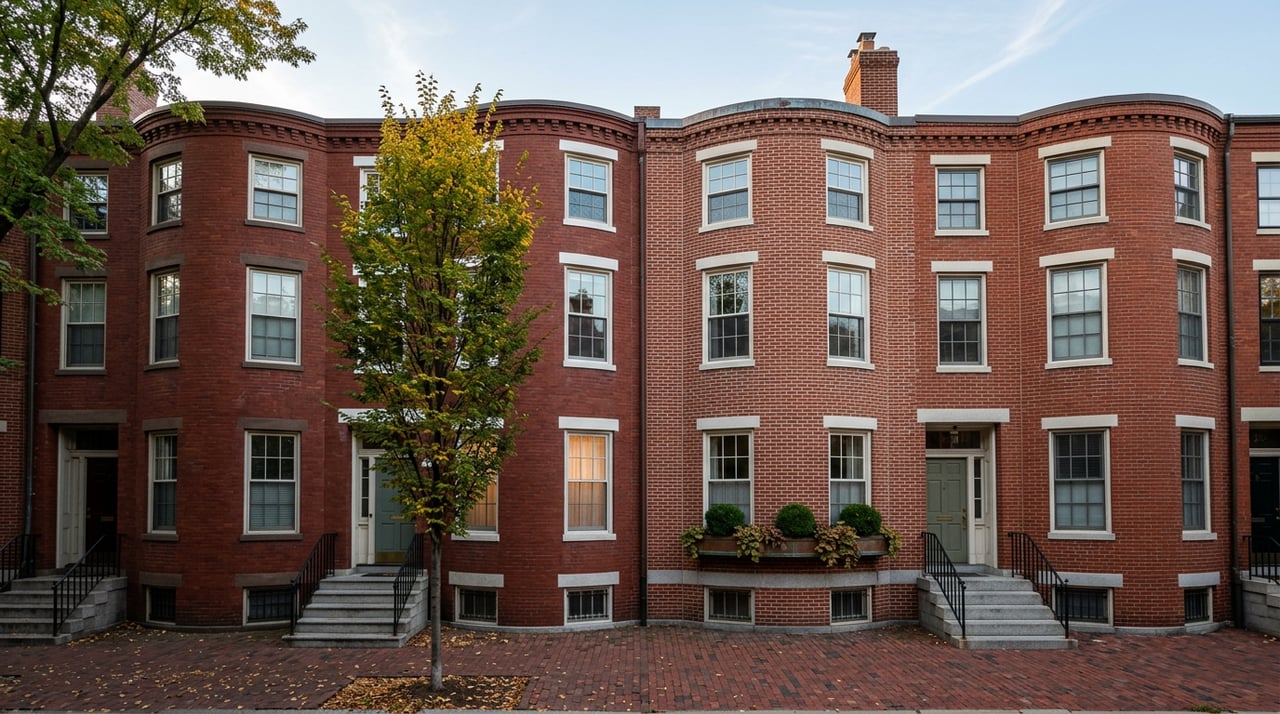
Massachusetts law explicitly allows a condominium to be self-managed by its elected trustees instead of hiring a management company, and plenty of associations choose that route. Back Bay's architecture makes self-management especially common. Much of the neighborhood is built from 19th-century brownstones on Commonwealth Avenue, Marlborough Street, and Beacon Street that were sliced into a handful of units decades ago, the kind of building where hiring a full management company can feel like overkill for four or five owners splitting a modest common budget.
That arrangement works fine for years. It becomes a problem the week a sale is scheduled, when the same volunteer board that handles trash contracts and snow removal also has to draft a legally binding financial statement, get it signed by the correct number of trustees, and have it notarized on a deadline. Boston.com's reporting on Boston-area homeowners associations notes that self-managed buildings run the full range from four units to four hundred, and that how well the association is run affects not just daily life in the building but the value of the home itself. In a small, self-managed Back Bay brownstone, the person producing your 6(d) certificate might also be the person who plows the front steps.
Why the Certificate Is Only a Snapshot
A 6(d) certificate reflects what the association's records show on the day it is signed, and association finances draw close attention after a loss. In late June 2026, Boston.com reported that owners in a Worcester Square condo building in the South End said more than $800,000 in insurance funds had gone missing after a fire made the building unlivable. The account comes from the owners, and this post takes no position on the circumstances.
That situation is in the South End rather than Back Bay, and it is a single reported dispute. It does show why a 6(d) certificate is best read alongside the association's budget, reserve information, and recent meeting minutes. The certificate reports what is owed on the day it is signed and does not describe the association's overall finances.
A Second Clock the Certificate Doesn't Mention
Even a perfectly accurate 6(d) certificate has a blind spot, and it matters more in Back Bay than in most Boston neighborhoods. The certificate discharges the lien for sums already assessed. It says nothing about reserves, pending litigation, or an assessment that trustees have discussed but not yet voted on, which means a buyer can close on a unit with a spotless certificate and still walk into a five-figure special assessment a few months later.
Back Bay has an unusually direct path to exactly that scenario, because Boston's façade inspection ordinance applies to any building over 70 feet tall. Under Section 9-9.12 of the city's municipal code, an occupied building over that height needs a hands-on exterior wall inspection from a licensed architect or engineer every five years, with an unoccupied building inspected annually. A building can come back "Safe," "Unsafe," or with a middle designation known as SWARMP, safe for now but showing conditions likely to turn unsafe before the next cycle unless repairs happen on a defined schedule. Under a 2022 amendment to the ordinance, buildings that miss their inspection deadline accrue fines of $300 a day. Single-family, two-family, and three-family homes are exempt, but Back Bay's taller elevator buildings and converted apartment blocks are squarely inside the ordinance's reach.
A board that just received a SWARMP finding is sitting on a repair bill it hasn't yet turned into a formal assessment. That bill won't appear anywhere on a 6(d) certificate, because the certificate only reports what's currently due, not what a board has been told it will owe. A buyer whose only due diligence is a clean 6(d) has confirmed the past and learned nothing about the next five years.
Why the Stakes Are Higher in This Particular Market
None of this would matter much if Back Bay condos traded quickly and cheaply, but the neighborhood does neither. In the first quarter of 2026, the median Back Bay condo sale price ran close to $1.9 million at roughly $1,627 a square foot, and days to offer for the quarter averaged between 66 and 108 days, with only units offering parking, outdoor space, or direct elevator access moving in anything close to 25 days. As of July 2026, the neighborhood's typical home value sat near $1.3 million. That is a market where a two-week delay over a stuck 6(d) certificate is not a minor inconvenience. It's a rate lock running out on a rate that's no longer available, or a buyer's competing offer on a different unit expiring while trustees track down a notary.
The delay risk also is not spread evenly across the neighborhood. Spring 2026 submarket data broke Back Bay into roughly three pockets: a Back Bay East segment with a median listing price around $2.27 million and 43 days on market, a Back Bay West segment closer to $1.05 million and 51 days on market, and a Prudential-St. Botolph segment near $1.73 million at 40 days. For comparison, Boston's condo market overall that spring showed a median listing price near $850,000 with 32 days on market and multiple competing offers per listing. Every Back Bay pocket moved slower than the citywide condo market, and the segment with the lowest price point, the one built most heavily from smaller brownstone conversions, also carried the longest average time to a signed deal. That is the exact profile of building most likely to be self-managed and least likely to have a dedicated staff member ready to turn around a 6(d) certificate on short notice.
Getting Ahead of the Document
None of this argues against buying or selling a Back Bay condo. It argues for treating the building's own paperwork as part of the deal, not an afterthought handled the week before closing. A seller can ask their board for the certificate the moment a purchase and sale agreement is signed rather than waiting for the buyer's attorney to request it. A buyer's attorney can ask early whether the association is self-managed or professionally managed, since that answer predicts how quickly the certificate will actually arrive. Either side can also ask whether the building has been inspected under the façade ordinance recently and what the result was, since a SWARMP finding is public information a board has to file with the city and a buyer is entitled to ask about before assuming a clean 6(d) tells the whole story.
A Few Questions Worth Asking Early
Does a clean 6(d) certificate mean no special assessment is coming? No. It certifies what the unit owes as of the date it's signed. It says nothing about reserves, pending litigation, or a repair program the board has discussed but not yet voted into an assessment.
Is a self-managed association automatically a red flag? No. Massachusetts law permits self-management, and plenty of small associations run tightly on volunteer effort. The risk isn't the structure, it's whether that structure has kept accurate, current books and has someone available to produce a notarized document on short notice.
Does the façade ordinance apply to every Back Bay building? No. It applies to buildings over 70 feet, with an exemption for single-family, two-family, and three-family residential structures. Many of Back Bay's classic brownstone conversions fall under the height threshold. The city's taller elevator buildings and larger conversions do not.
A closing that stalls over a signature is still a closing worth getting right the first time. If you're preparing to list a Back Bay condo or you're under agreement on one and want a second set of eyes on the building's own paperwork before it becomes a problem, Prism Real Estate Group can walk through what your specific association's documents actually show.