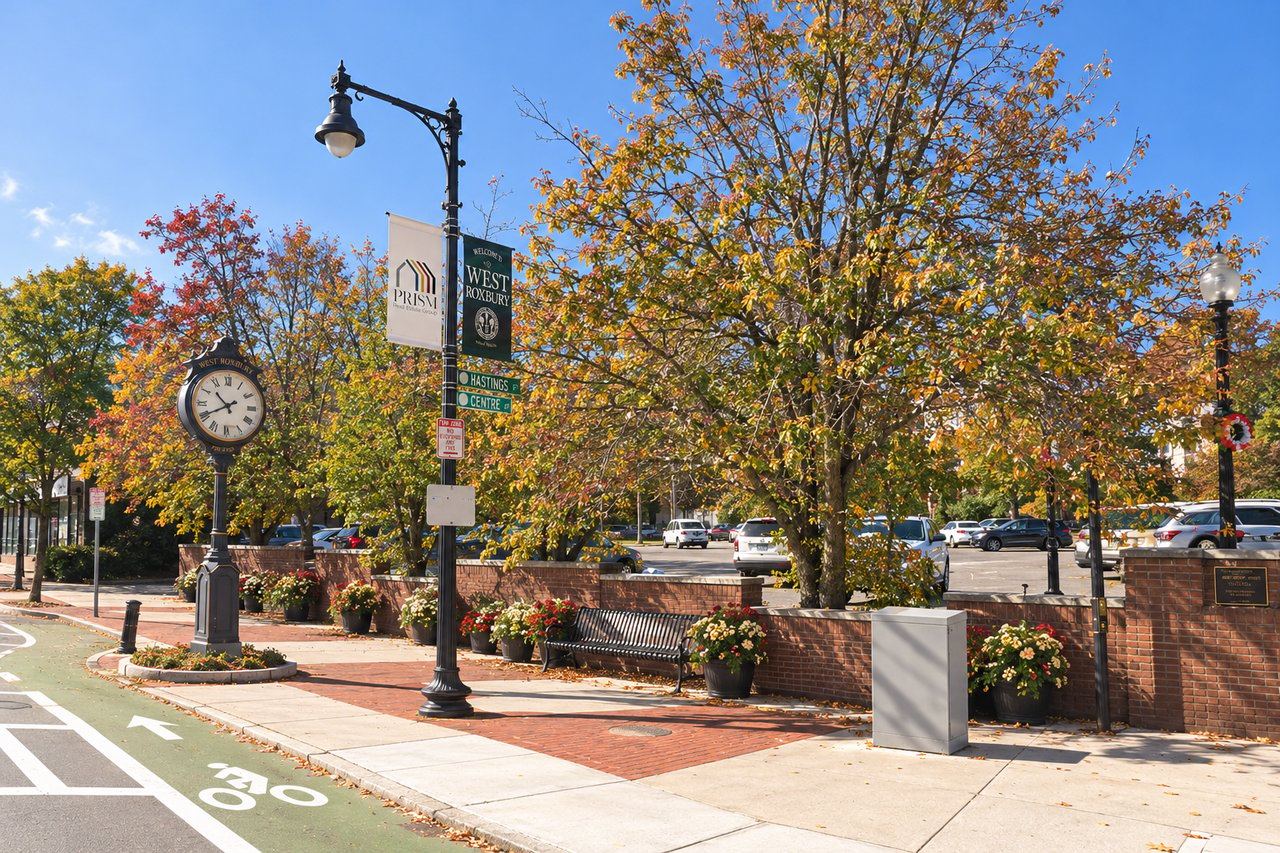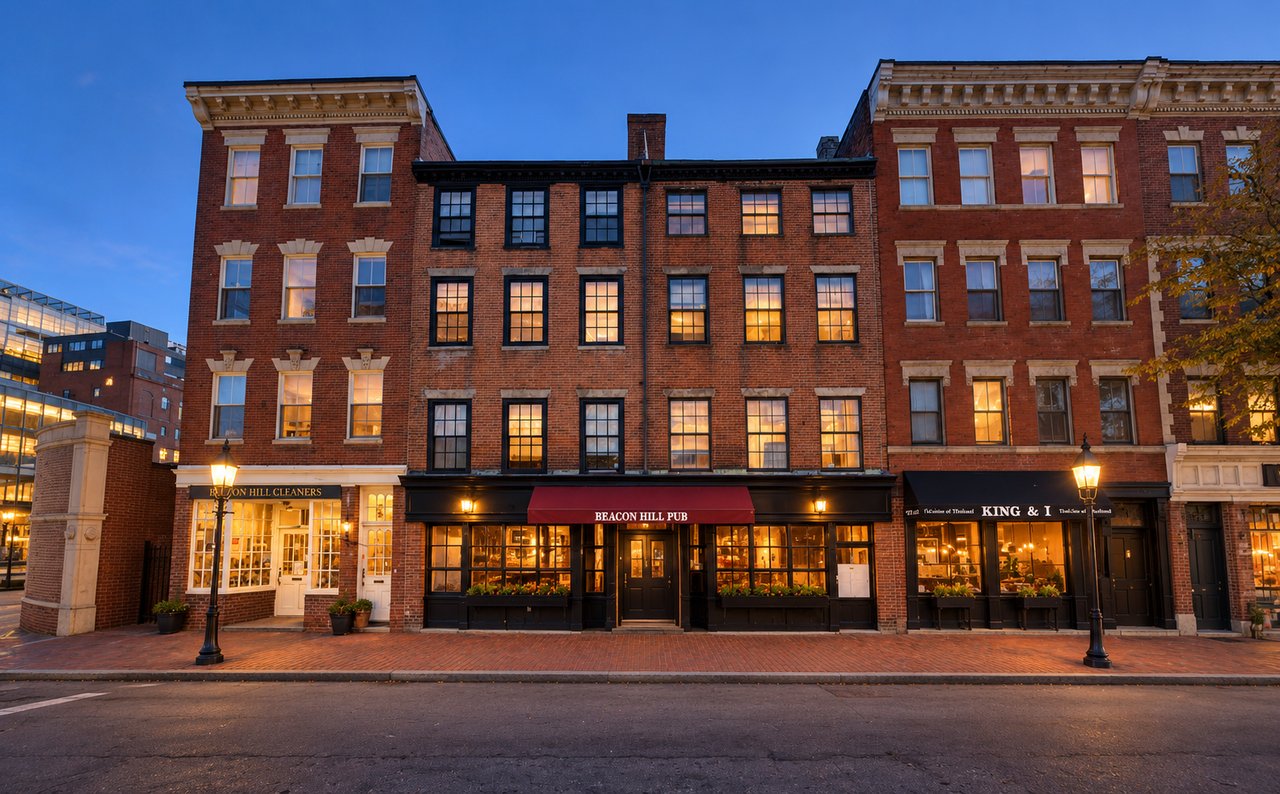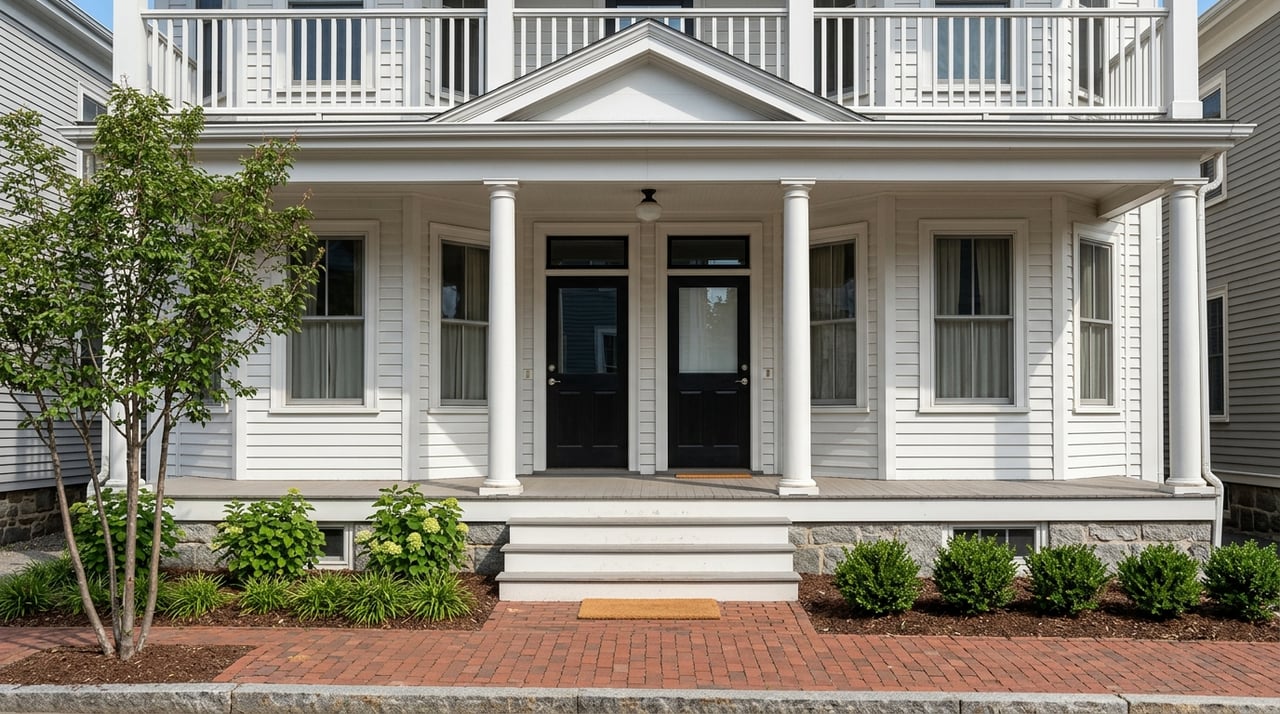
If Boston home prices have you wondering whether buying a place of your own is still realistic, house hacking may be the strategy that changes the math. In this city, buying a multi-family home and living in one unit while renting the others is not some fringe idea. It fits the way Boston is actually built. If you are curious about whether a two-family, three-family, or triple-decker could help you get into the market, this guide will walk you through the big picture, the financing paths, and the day-to-day realities. Let’s dive in.
Why house hacking fits Boston
Boston is unusually well positioned for house hacking because so much of its housing stock is already multi-unit. According to the City of Boston’s fair housing analysis, about 81% of housing units are in multi-unit buildings, and about 24% are in 3-4-unit structures. The city is also largely renter-occupied, which matters when your plan depends on having rental demand in the other units.
That makes house hacking feel more practical here than in markets dominated by detached single-family homes. In Boston, the building type you need already exists across many neighborhoods. You are not trying to force an unusual strategy into an unsuitable market.
Boston’s triple-decker history also supports this approach. The city identifies triple-deckers as an iconic local housing type that developed from the 1880s through the 1930s, and its Future-Decker work focused on small infill sites in places like Roxbury, Dorchester, Mattapan, and Hyde Park. In plain terms, Boston has a long-standing pattern of smaller multifamily living.
Statewide data points in the same direction. Massachusetts says 20% of homes are in 2-4 multi-family buildings. For buyers in Greater Boston, that helps explain why owner-occupying one unit and renting the others can be a natural entry point rather than a niche workaround.
What house hacking looks like in Boston
In practice, house hacking usually means buying a 2-3 family home or a triple-decker, moving into one unit, and renting the others. You become both a homeowner and an on-site landlord. That can help offset your monthly housing costs, but it also changes your responsibilities.
In Boston, this setup often works best for buyers who want to build equity while taking on a manageable income property. You are not buying a large apartment building. You are buying a home where one unit is yours and the other units help support the carrying costs.
This can be appealing if you want more control over your housing costs and a path into investment property ownership. It can also be a way to learn the basics of landlording on a smaller scale while living close enough to monitor the property day to day.
Financing options to know
Conventional low-down-payment loans
Conventional financing can work for owner-occupied 2-4-unit properties. Fannie Mae’s HomeReady product information shows that 2-4-unit principal residences can be eligible, with as little as a 3% borrower contribution in some higher loan-to-value scenarios. Freddie Mac also says 2- to 4-unit owner-occupied primary residences are eligible, and rental income from the units you will not occupy may be added to qualifying income.
That said, low-down-payment conventional loans often include private mortgage insurance until you reach enough equity. You should budget for that monthly cost upfront so it does not surprise you after closing.
FHA loans
FHA financing is available on 1-4 unit properties with down payments as low as 3.5%, according to HUD. For Boston buyers looking at 3-4 unit homes, there is an extra layer to understand. HUD applies a self-sufficiency test, which means the property’s rents must be strong enough relative to the full housing payment after vacancy and maintenance adjustments.
HUD’s current guidance also indicates that buyers of 3-4 unit properties must verify three months of PITI reserves after closing. So while FHA can be an accessible path, the underwriting for larger owner-occupied multifamily properties is more detailed than many buyers expect.
VA loans
If you are an eligible veteran, VA-backed financing can be especially attractive for house hacking. The VA says a veteran can buy a home with up to four units as long as one unit is owner-occupied. Many VA-backed loans also require no down payment and no monthly PMI.
For the right buyer, that combination can make a Boston multi-family purchase much more achievable. It is still important to run the full monthly numbers, but the loan structure can be a major advantage.
MassHousing programs
MassHousing is another important option for first-time buyers in Massachusetts. Its current down payment assistance matrix includes a fixed $30,000 statewide second mortgage option and a $25,000 amortizing 2% option for 1-4 unit properties. For buyers trying to cover Boston’s upfront cash demands, that support can make a meaningful difference.
MassHousing also requires landlord counseling before closing on 2-4 family purchases. That is worth viewing as a benefit, not just another box to check. If you are buying your first multi-family, a better understanding of landlord responsibilities can help you avoid expensive mistakes.
How lenders view rental income
One of the biggest reasons buyers consider house hacking is the chance to use rental income to help qualify. That is possible, but lenders do not count rent at face value. Freddie Mac allows rental income from non-owner units in a 2-4-unit primary residence, and Fannie Mae includes 2-4-unit primary residences in its rental income guidance.
The key point is that underwriting usually builds in adjustments. FHA’s self-sufficiency rules show that vacancy and maintenance assumptions are part of the math. In other words, lenders know that rent is useful, but not perfectly predictable.
That means you should avoid shopping at the very top of your comfort zone. A smarter approach is to treat projected rent as helpful support, not as a reason to stretch your budget too thin.
Budget beyond the down payment
Upfront costs
Your cash needed at closing will likely be more than just the down payment. Fannie Mae says closing costs often run about 2% to 5% of the purchase price. On top of that, low-down-payment conventional loans may include mortgage insurance.
If you plan to rent out a unit right away, Boston’s rental rules also affect your cash planning. The city says landlords may collect first month’s rent, last month’s rent, a security deposit up to one month’s rent, and a lock-change fee at the start of tenancy. Boston also prohibits application fees, credit-check fees, and holding fees in ordinary rental situations.
That mix can change your timing in a good way and a bad way. You may collect some tenant move-in funds, but you also need to understand what can legally be collected and how those funds must be handled.
Ongoing expenses
Your monthly budget should include more than the mortgage. Common cost categories include:
- Property taxes
- Insurance
- Utilities you pay as owner
- Repairs and maintenance
- Common-area upkeep
- Pest control
- Trash-related costs
- City compliance expenses
Boston’s housing code makes clear that owners are responsible for important building basics, including safe heat and water, visible owner contact information, pest extermination in buildings with two or more units, and certain common-area items such as lights and trash barrels. These are not optional line items.
Vacancy and reserves
Vacancy is not a rare disaster scenario. It is a normal operating risk. If a unit turns over, needs repair, or sits empty between tenants, your numbers still have to work.
HUD’s FHA rules reflect that reality by using vacancy and maintenance assumptions in underwriting. For 3-4 unit FHA purchases, the reserve requirement after closing reinforces the same message: you need a financial cushion. A healthy reserve fund can make the difference between a manageable hiccup and a stressful cash crunch.
There is another reserve issue many first-time landlords miss. Under Massachusetts law, a security deposit can be no more than one month’s rent and must be held in a separate, interest-bearing account. You should not think of that deposit as money available for routine operating expenses.
What it means to be an on-site landlord
Registration and inspections
In Boston, rental property registration is required every year by July 1. The city says registration is still required even if the property is vacant, under renovation, or rented to relatives who are not on the deed. If you are house hacking, that annual requirement is part of the ownership package.
Boston also says rental properties are generally inspected at least once every five years. However, buildings with six or fewer units where the owner lives in one of the units are exempt from the inspection program. That exemption can be relevant for owner-occupied 2- and 3-family homes, but it does not remove your obligation to keep the property safe and sanitary under the housing code.
Daily responsibilities
Being an on-site landlord in Boston is hands-on. The city expects functioning smoke and carbon monoxide alarms, heat, water, adequate exits, pest-free common areas, garbage control, and visible owner contact information. If you pay for utilities, you also need to understand the city’s heating expectations during heating season.
Boston also allows landlords to ask for references and proof of income when screening tenants. That can help you create a more stable rental experience, which matters even more when your tenants live in the same building you do.
Shared-space realities
House hacking sounds great on a spreadsheet, but the lifestyle side matters just as much. In a compact Boston multi-family, you will likely deal with shared walls, trash storage, noise, entryways, and move-in logistics more often than a typical single-family homeowner would.
Boston notes that rentals may be structured with a lease or as a tenancy-at-will arrangement, with tenancy-at-will allowing 30-day written notice. The city also warns that noise complaints, late-night parties, and friction over shared spaces can escalate quickly in dense neighborhoods. Living on-site can help you stay involved, but it also means you are closer to every issue.
Older Boston housing and lead paint
Boston’s older housing stock is part of its charm, but it also brings real compliance issues. Massachusetts says that in homes built before 1978 where a child under age 6 lives, lead hazards must be removed or controlled. Owners of rental property can be legally responsible if a child is poisoned by lead hazards.
The state also says owners cannot refuse to rent because of lead paint. Boston notes that it helps eligible owners cover the cost of lead paint removal. If you are evaluating an older multi-family, lead compliance should be part of your due diligence from day one.
Is house hacking right for you?
House hacking a Boston multi-family can be a smart way to buy property in a high-cost market, especially when the city’s housing stock already supports the model. It can help you enter homeownership, build equity, and create an income stream from day one. But it also asks you to think like an owner, an operator, and a landlord.
The best outcomes usually come from careful planning. You need realistic rent assumptions, a clear reserve strategy, and a full understanding of Boston’s rules around registration, housing code compliance, deposits, and day-to-day management. If you go in with clear eyes, a multi-family can be more than a starter home. It can be the beginning of a long-term asset.
If you are exploring whether a Boston two-family, three-family, or triple-decker fits your budget and goals, Prism Real Estate Group can help you evaluate opportunities with local market insight, valuation rigor, and practical guidance tailored to Greater Boston.
FAQs
What does house hacking mean in Boston?
- In Boston, house hacking usually means buying a 2-3 family home or triple-decker, living in one unit, and renting the other unit or units.
Can you buy a Boston multi-family with a low down payment?
- Yes. Research in this guide shows possible paths through conventional loans, FHA loans, VA-backed loans for eligible veterans, and MassHousing programs for qualified buyers.
Can rental income help you qualify for a Boston multi-family mortgage?
- Yes, lenders may count rent from non-owner units, but they usually apply adjustments for factors like vacancy and maintenance rather than using the full projected rent.
What landlord costs should Boston house hackers plan for?
- You should plan for the mortgage, taxes, insurance, utilities you cover, repairs, maintenance, pest control, trash-related costs, and city compliance responsibilities.
Do Boston house hackers need to register their rental property?
- Yes. Boston requires annual rental property registration, even if the property is vacant, under renovation, or rented to relatives who are not on the deed.
Are owner-occupied Boston multi-families exempt from inspections?
- Boston says buildings with six or fewer units where the owner lives in one unit are exempt from the city’s inspection program, but they still must meet housing code requirements.
How do security deposits work for Boston rental units?
- Massachusetts law allows a security deposit of up to one month’s rent, and it must be held in a separate, interest-bearing account rather than used as operating cash.
What should buyers know about lead paint in older Boston multi-family homes?
- Massachusetts lead law says homes built before 1978 where a child under age 6 lives must have lead hazards removed or controlled, and rental owners can be legally responsible for lead-related harm.