Thinking about life in Boston without a car? In many parts of the city core, that idea is not just possible, it is already normal. If you want to cut down on driving, avoid parking headaches, or buy in a neighborhood where daily life feels simpler on foot, this guide will help you understand where car-free living works best and what to look for in a home. Let’s dive in.
.
Why Boston supports car-free living
Boston stands out as a city where going without a car can work well in the right location. According to the City of Boston, 35% of Boston households did not have a vehicle in 2022, and 38% of resident workers commuted without a car. Those numbers reflect a city where many residents already rely on walking, transit, and bike options as part of everyday life.
The city also notes that public transportation reaches every neighborhood by trolley, subway, bus, or commuter rail. That matters when you are choosing where to live, because a car-free routine depends less on one single feature and more on having several mobility options close at hand. In Boston’s core neighborhoods, that mix is often built right into the block.
Boston’s planning also points toward a more connected, less car-dependent future. The city’s mobility-hub planning aims for every home to be within a 10-minute walk of rail, key bus service, Bluebikes, and car-share. For buyers and renters, that signals continued support for walkable, transit-served living.
.
What makes a neighborhood car-free friendly
If you want to live comfortably without a car, the best fit is usually a neighborhood with three things: density, mixed-use streets, and multiple transit choices. In practical terms, that means you can walk to coffee, groceries, errands, and dining, while also having reliable ways to get across town.
In Boston’s core, that often points toward condos, apartments, brownstones, row houses, and other attached housing types. Detached single-family homes are less common in these areas, and the daily rhythm tends to be more pedestrian-focused. The real key is choosing a building and block that sit within a walkable urban fabric, not just picking a neighborhood by name.
.
Downtown for all-in convenience
Downtown is one of the clearest matches for a car-free household. The City of Boston describes it as the city’s hub since the 1700s, with condos and apartments, historic apartment buildings, and modern glass towers. It also offers easy walking access to theaters, restaurants, cafes, parks, and the waterfront.
For many residents, Downtown makes daily routines straightforward. You can often walk to work, run errands on foot, and use transit or bike share for trips beyond your immediate area. Downtown Crossing’s heavy pedestrian activity also reflects how strongly this area is built around people moving on foot.
If your top priority is convenience, this is one of the first places to consider. The tradeoff is that you are choosing a fast-moving urban setting, so the right building and street location matter just as much as the neighborhood label.
.
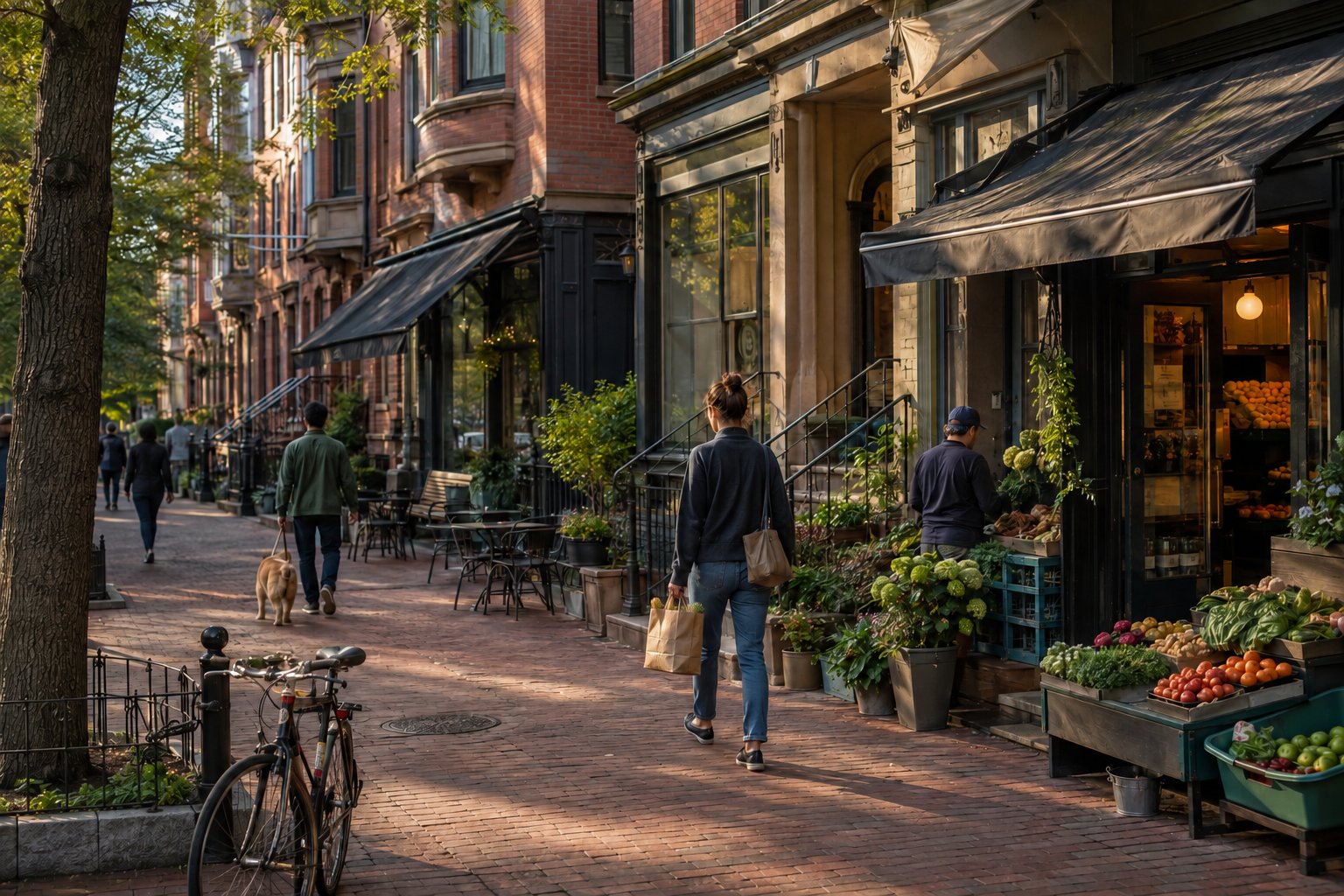
Back Bay and Beacon Hill for classic walkability
Back Bay and Beacon Hill are two of Boston’s most established car-light neighborhoods. Both are protected historic districts, and both offer a street pattern and housing style that support walking as part of daily life.
Back Bay combines vintage homes with major retail corridors like Newbury Street, Boylston Street, and Commonwealth Avenue. That mix can make it easier to handle shopping, dining, and day-to-day errands without needing a vehicle. For buyers who want a central location with a classic Boston feel, Back Bay often stays high on the list.
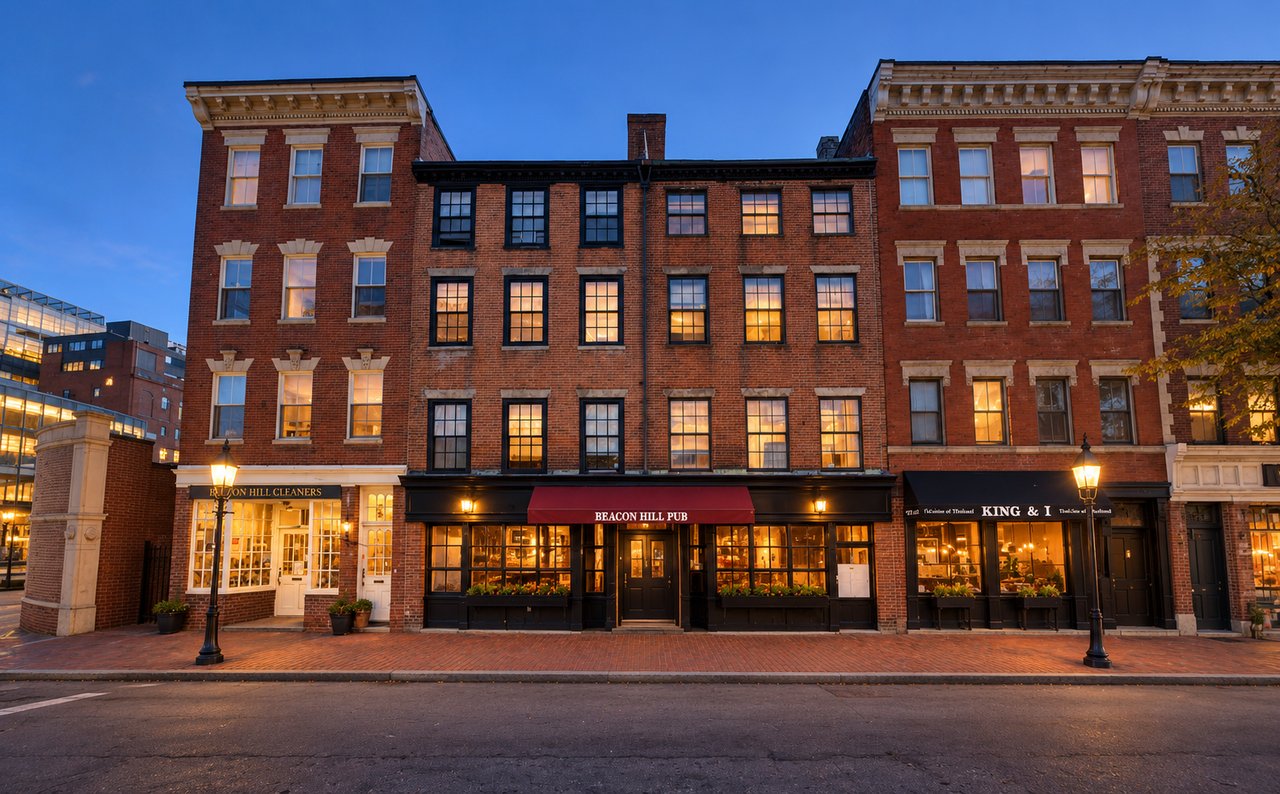
Beacon Hill offers a different atmosphere but a similar practical advantage. The city describes narrow streets, brick sidewalks, gas lamps, brick row houses, and small local businesses along Charles Street. For someone who values a compact neighborhood where everyday needs are close by, Beacon Hill can be a strong fit.
.
South End, Chinatown, and Leather District for daily ease
If your goal is to make everyday errands simpler, the South End, Chinatown, and Leather District deserve a close look. These areas offer a strong mix of housing, local businesses, and access to the rest of the city.
The South End is known for Victorian brownstones, active main streets, and nearly 30 parks. It is also minutes from Downtown and Back Bay, which helps when your routine includes both neighborhood errands and cross-town trips. Many residents can manage a large part of daily life on foot here.
Chinatown pairs dense housing and commercial activity with easy access to Downtown, the waterfront, and South Station. That transit connection can make a big difference if you want flexibility without owning a car. It is often a practical choice for people who want an active, central location with strong rail and bus access.
The Leather District is smaller, but it offers a mixed-use setting in historic warehouse buildings with both commercial and residential tenants. If you like the idea of living near the center of the city in a compact urban environment, it may be worth considering.
.
Fenway/Kenmore and Mission Hill for connected routines
Fenway/Kenmore and Mission Hill often appeal to renters, first-time buyers, and people whose daily life revolves around major institutions. These neighborhoods can support a car-free routine while offering a little more variety in housing patterns and price points.
Fenway/Kenmore includes major cultural institutions and green space, along with strong connections to the rest of Boston. On a mild day, a combination of walking and Bluebikes can cover a lot of ground. On colder or wetter days, transit becomes the natural backup.
Mission Hill is described by the city as one of Boston’s most convenient and diverse neighborhoods. It includes new condos, brick row houses, and triple-decker homes, and it sits about one mile from downtown. Its closeness to the Longwood Medical Area also makes it a useful example of how a car-free lifestyle can work outside the most central downtown blocks.
.
North End for a compact, walkable lifestyle
The North End is another strong option for a car-light or car-free buyer. Boston describes it as a neighborhood with narrow, vibrant streets, restaurants, cafes, and a long-standing Italian-American community presence.
From a practical standpoint, the North End works well for people who want a smaller neighborhood feel while staying close to the core. If you enjoy doing most things on foot and want an area where walking is part of the experience of daily life, this neighborhood can be appealing.
.
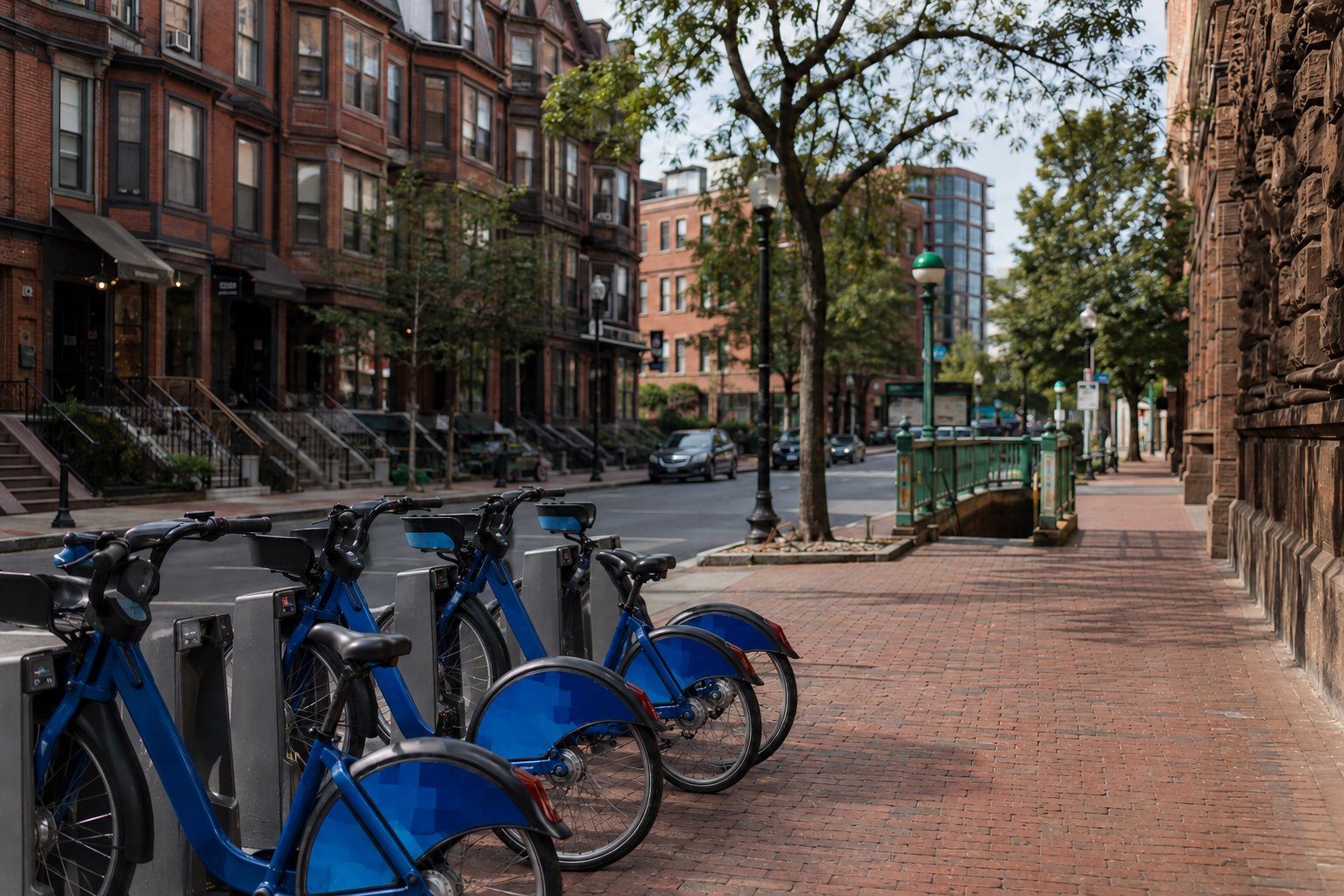
How Bluebikes and car-share fill the gaps
Even in a transit-rich city, most people still want a backup plan. That is where Bluebikes and car-share can make car-free living much easier.
The City of Boston says Bluebikes has more than 5,600 bikes and nearly 600 stations across Metro Boston. The city also reports that nearly 90% of Boston households are within a 10-minute walk of a bike-share station. For residents without a car, that can help solve the first-mile and last-mile problem between home, transit, and everyday destinations.
Car-share plays a different role. Boston’s Car Share Boston program is intended to reduce private vehicle ownership, ease congestion in the downtown core, and support walkable, transit-served areas. For the occasional trip that truly requires a car, car-share can be a practical substitute for full-time ownership.
.
What a car-free week can look like
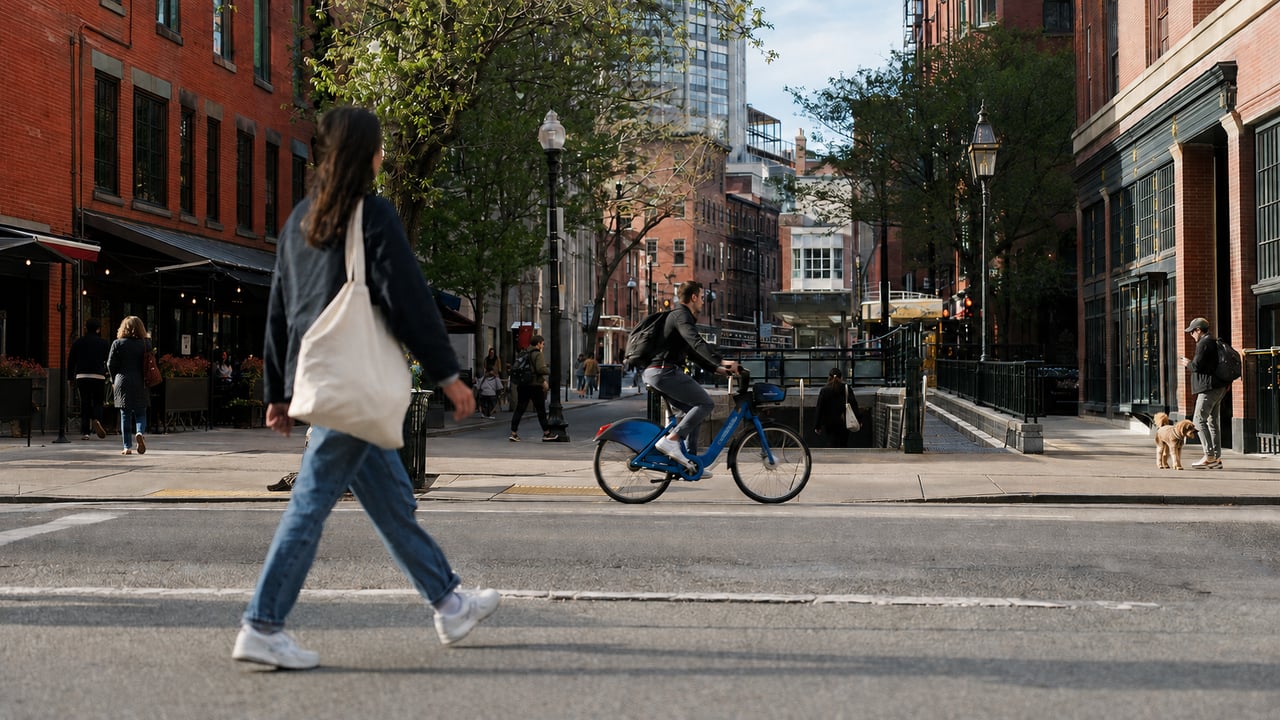
In neighborhoods like Downtown or Back Bay, your week may center on walking first, then using the T, bus, or bike share when needed. A normal weekday might include a short walk to work, lunch nearby, and an evening trip home by transit or Bluebikes. In these areas, that routine often feels natural because so many destinations are close together.
In the South End or Chinatown, daily errands may be manageable on foot, while cross-town trips rely more on transit or bike share. That setup works well for people who want neighborhood convenience without feeling cut off from the rest of Boston.
In Fenway/Kenmore or Mission Hill, the pattern may depend more on work, school, or medical-area connections. You may walk some days, bike on others, and lean on transit in bad weather. The key is flexibility, not perfection.
Boston’s broader street culture also supports this lifestyle. Programs like Open Newbury and Open Streets reinforce the city’s pedestrian-first identity, even though they are not a replacement for year-round transit.
.
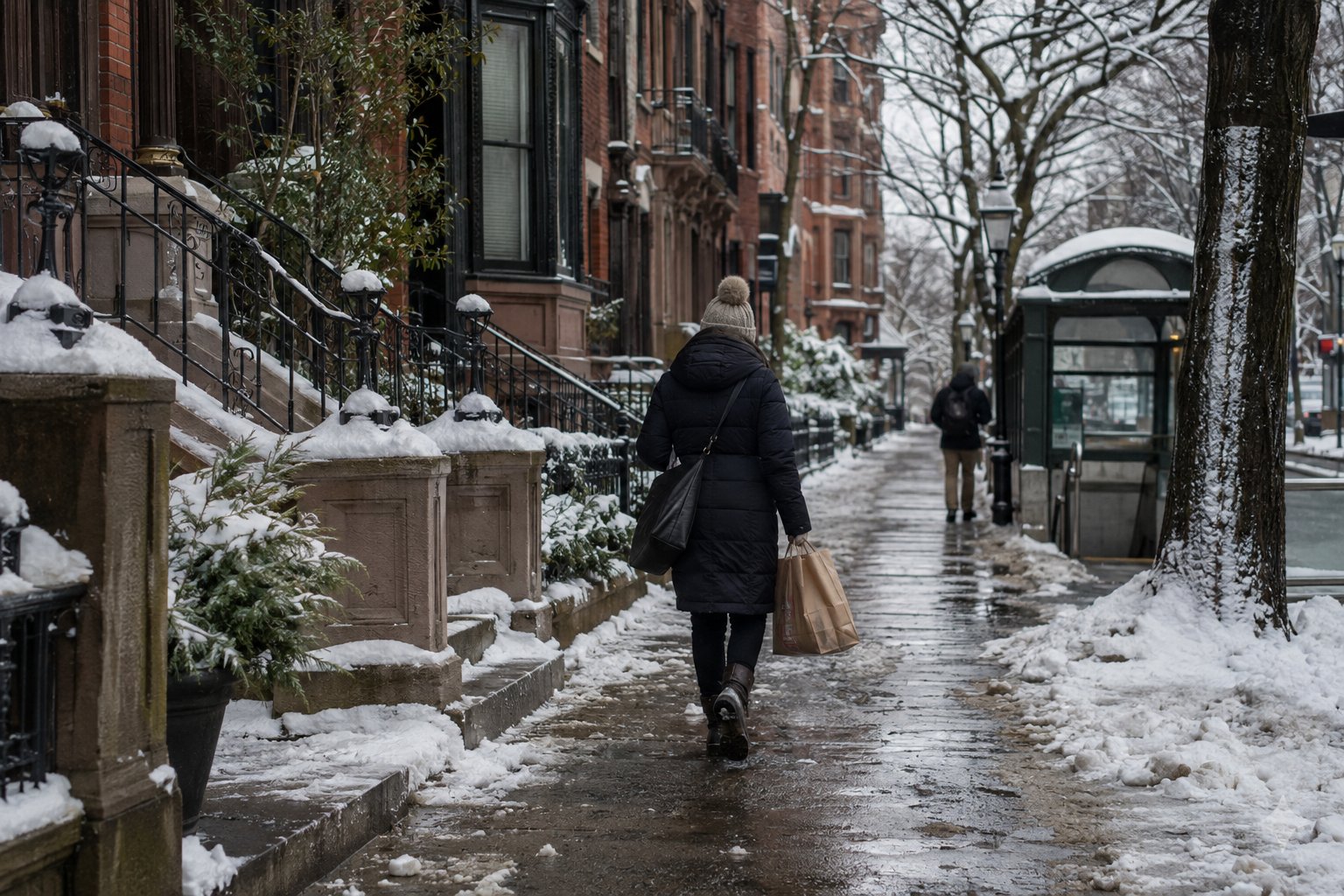
Winter is the real test
If you are considering a no-car lifestyle in Boston, winter is the most important reality check. The city notes that winter storms can range from freezing rain and ice to blizzard conditions. That means your route, your footwear, and your tolerance for weather all matter.
Boston says it prioritizes schools, bus stops, public buildings, hospitals, and other essential services after storms. It also expects protected bike lanes to be cleared within 24 hours after snowfall ends. Those city practices can help support a car-free routine, but winter still requires planning and flexibility.
For biking, the city’s guidance is straightforward. Riders should dress in layers, use lights, watch for black ice and slush, and keep bikes maintained. Boston also suggests Bluebikes as an option for people who do not want to maintain a winter bike, though some stations may be relocated or removed during winter.
.
The tradeoff of keeping a car anyway
Some buyers want the option to own a car even if they plan to use it rarely. That can work, but Boston’s own guidance makes clear that ownership brings added complexity. Traffic, street sweeping, parking rules, towing, tickets, resident parking permits, meters, and annual excise tax all become part of the picture.
For many households, that is exactly why a car-free or car-light setup feels appealing in the core neighborhoods. If your building has strong transit access and nearby bike-share or car-share, you may gain convenience by not taking on full-time vehicle ownership.
.
What to look for when choosing a home
If you want Boston living without a car, focus on the micro-location as much as the unit itself. A beautiful condo is only part of the story if the block makes daily life harder than it needs to be.
Here are a few practical things to look for:
- Short walks to T stops, key bus routes, or South Station connections
- Easy access to Bluebikes stations
- Mixed-use streets with shops, cafes, and daily errands nearby
- A building location that feels comfortable for walking in different weather
- A realistic backup option for occasional car trips
This is where local guidance matters. Two homes in the same neighborhood can create very different day-to-day experiences depending on the block, the nearby transit access, and how your routine actually works.
If you are weighing Boston’s core neighborhoods, a thoughtful home search should go beyond square footage and finishes. It should also measure how well a location supports the life you want to live.
Whether you are buying your first condo, planning a move within Boston, or trying to decide if car-free living is realistic for your routine, Prism Real Estate Group can help you evaluate the neighborhood, block, and property details that matter most.
.
FAQs
.
Which Boston neighborhoods are best for car-free living?
- Downtown, Back Bay, Beacon Hill, South End, Chinatown, Leather District, Fenway/Kenmore, Mission Hill, and the North End are among the strongest options discussed here because they combine walkability, mixed-use streets, and transit access.
.
Is Boston a realistic city for living without a car?
- Yes. The City of Boston reports that 35% of households did not have a vehicle in 2022 and that 38% of resident workers commuted without a car.
.
How does Bluebikes support car-free living in Boston?
- Bluebikes helps with first-mile and last-mile trips, and the city says nearly 90% of Boston households are within a 10-minute walk of a bike-share station.
.
What is the biggest challenge with car-free living in Boston?
- Winter is the main challenge because snow, ice, freezing rain, and colder conditions can make walking, biking, and transit connections less convenient.
.
Should you buy a home in Boston’s core if you plan to keep a car?
- You can, but Boston notes that car ownership may involve traffic, parking rules, permits, towing risk, meters, tickets, and annual excise tax, so it is worth comparing those tradeoffs with a car-light or no-car lifestyle.