Walk down Harvard Avenue this week and you will pass a Korean barbecue spot that did not exist in January, a shuttered tattoo parlor with paper over the windows, and a Taco Bell sitting where a legendary music venue used to book touring bands. This year's business changes include new arrivals and closures.
If you have lived in Allston or Brighton for more than a year, you already know the corridor turns over fast. Restaurants open, restaurants close, a bar becomes a boba shop becomes something else. What is different about 2026 is the concentration of it, alongside a major commercial property sale in June.
What opened
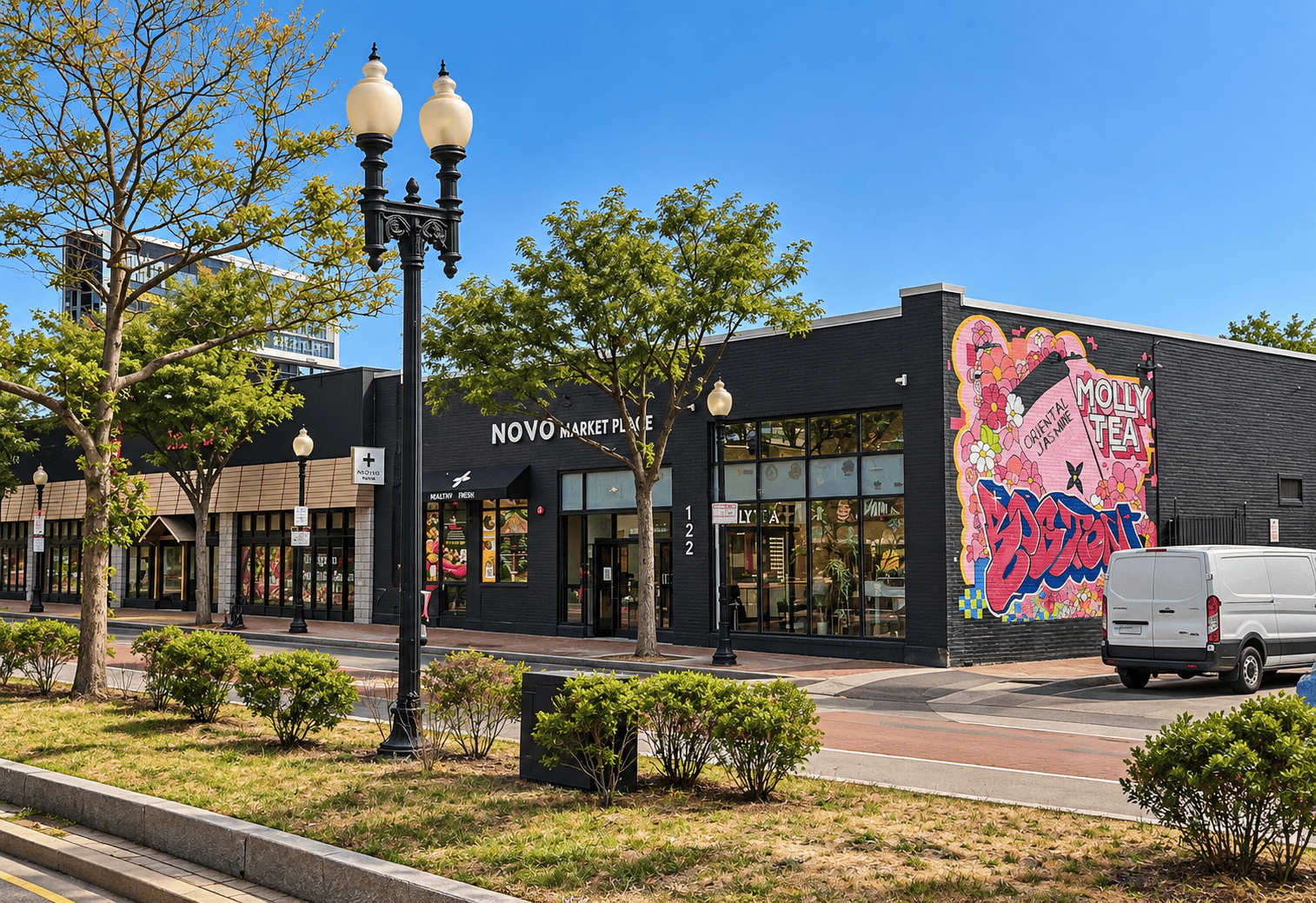
The most visible new arrival is Novo Marketplace, the food hall that soft opened on May 1 at 122 Brighton Avenue, the site formerly occupied by the vintage shop Urban Renewals before it decamped to Roslindale. Owner Winson Chen got approval from the Boston Licensing Board in late March for roughly 200 seats and hours running 8 a.m. to midnight, a compromise after the Allston Civic Association pushed back on his original request for a 2 a.m. closing time. Inside, the stalls include:
- Cotti Coffee
- Molly Tea
- Zhengxin Chicken
- Lumi Roll and Bowl
- Kopitiam
- Huang Ji Men
- Tasya's Kitchen, which joined a few weeks after the soft open
A block away, the group behind Cafe Weekend on Harvard Avenue expanded into the former Tavern in the Square space on Brighton Avenue with two new restaurants, Sanbada and Jinjee, serving wood-fired Korean dishes and Korean barbecue respectively. Phin Coffeehouse opened a second Allston location at 20 Western Avenue. Tom Yum Yang, from the team behind Sugar & Spice in Porter Square, put a sign up on Harvard Avenue earlier this year, the visible marker of a plan that had reportedly been in the works since 2022.
What closed
The other side of the ledger is just as specific. Amelia's Taqueria closed its 180 Brighton Avenue location on May 1 after 14 years, less than a year after reopening from a three-alarm fire that had gutted the space in 2022. Basics Furniture & Carpet is shutting its 151 Harvard Avenue storefront after 60 years, retreating to online-only sales out of a Norwood warehouse. Regeneration Tattoo has already shuttered. The Pet Shop is selling down inventory and preparing to move out. Twin Donuts is becoming a Blank Street Coffee. Draft Bar & Grille sits empty after its liquor license was revoked in January following an underage drinking incident. And the old Great Scott site, once one of the most storied small venues in Boston rock, is now a Taco Bell.
Seen individually, these read like a normal year of turnover in a neighborhood with a lot of young renters and a lot of foot traffic. Seen together, with a calendar attached, they point somewhere more specific.
A major building sale on Harvard Avenue
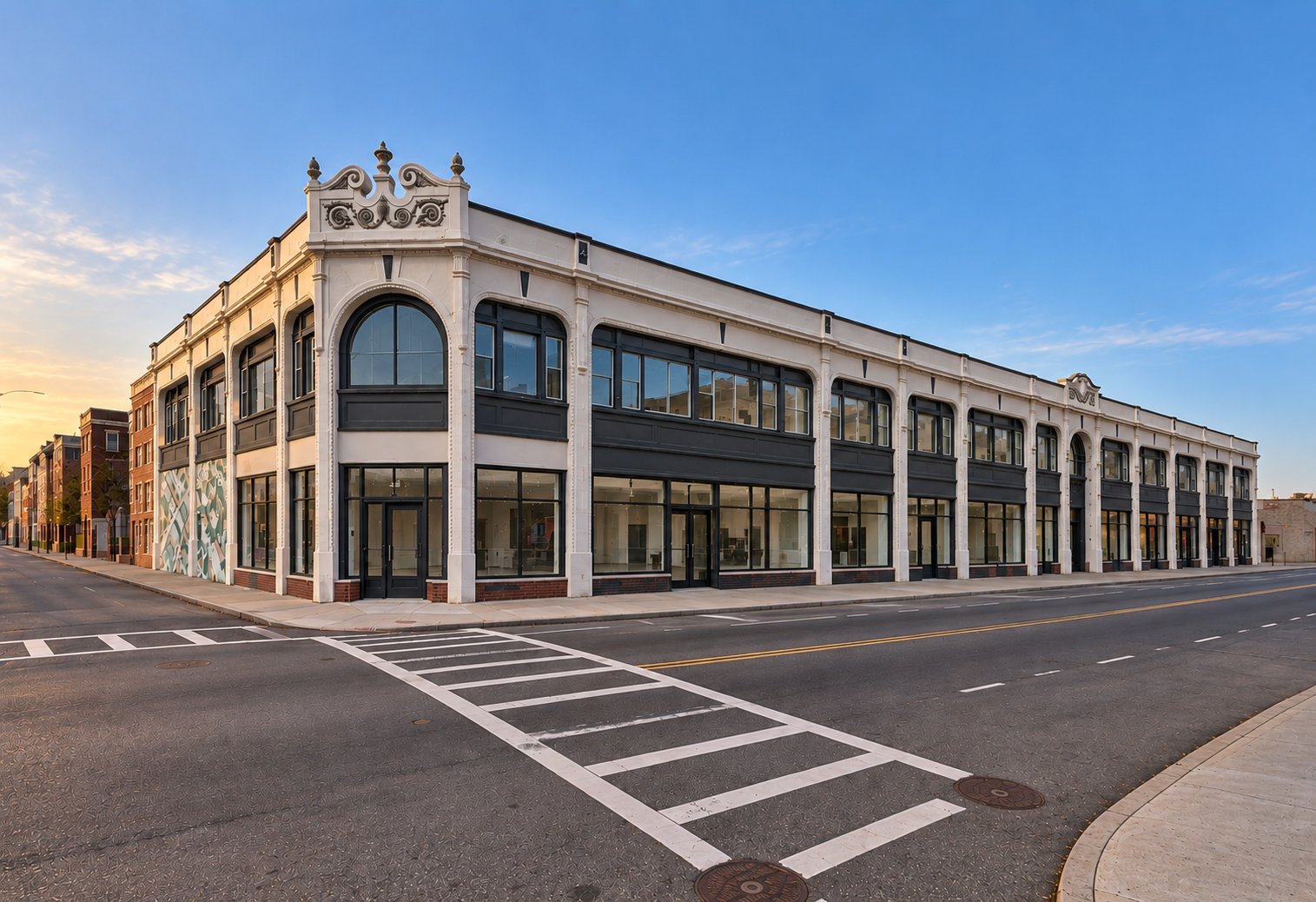
In June 2026, the Gordon building at 149-175 Harvard Avenue, long a hub for small independent businesses, was sold to Alpha Management Corp. That single purchase added roughly two dozen storefronts to the nearly 20 that Alpha already owned on the street, giving one owner a controlling share of Harvard Avenue's commercial real estate. Alpha then raised rents, tripling some of them, according to Boston Globe reporting from last month. Ben Franco, president of the Allston/Brighton Chamber of Commerce, told the paper that Alpha's communication with local business organizations has been minimal.
The turnover also raises a broader question: who is positioned to take over these spaces?
"It was a Koreatown before, but right now, Chinese people are more interested in opening businesses here," broker Koko Kwan told the Globe, describing the newest wave of tenant interest on the block.
That quote points to a second layer worth understanding, because it is not only about rising rent, it is about who can pay it. A single-owner taqueria signs one lease and carries one rent number. A food hall spreads that same overhead across eleven or sixteen smaller operators, each writing a check the size of a kiosk rather than a storefront. Chain-adjacent brands like Cotti Coffee and Blank Street Coffee already have a national rent model built for exactly this kind of corridor. The new arrivals reflect a mix of business models.
The competing explanation, and why it is not the whole story
The Globe piece also points to a generational shift as a contributing factor, noting that fewer young adults are drinking and going out and that Allston's commercial base has long depended on its unusually large 18-to-30 population. That is a real trend and it likely explains why bars like Tavern, Wonder Bar, and White Horse Tavern struggled and eventually closed or got carved into smaller restaurant spaces over the past few years.
The changes listed above unfolded over several months, alongside a generational shift in nightlife habits and the June sale. Mike Lee, president of Boston's OKTA Korean Business Association and owner of the Korean Village stall inside Novo Marketplace, said interest in Korean food and culture still helps businesses like his, while his business partner Sungjong Park acknowledged the difficulty of competing with the volume of new entrants. Even within a single ethnic business community, the newest arrivals are described as competition, not reinforcement.
Even Great Scott's revival is stuck on the same underlying problem. The plan to bring the venue back has stalled specifically because of rising construction costs, the same economic pressure that is pushing rents up for existing tenants a few blocks away.
What's on the calendar this month
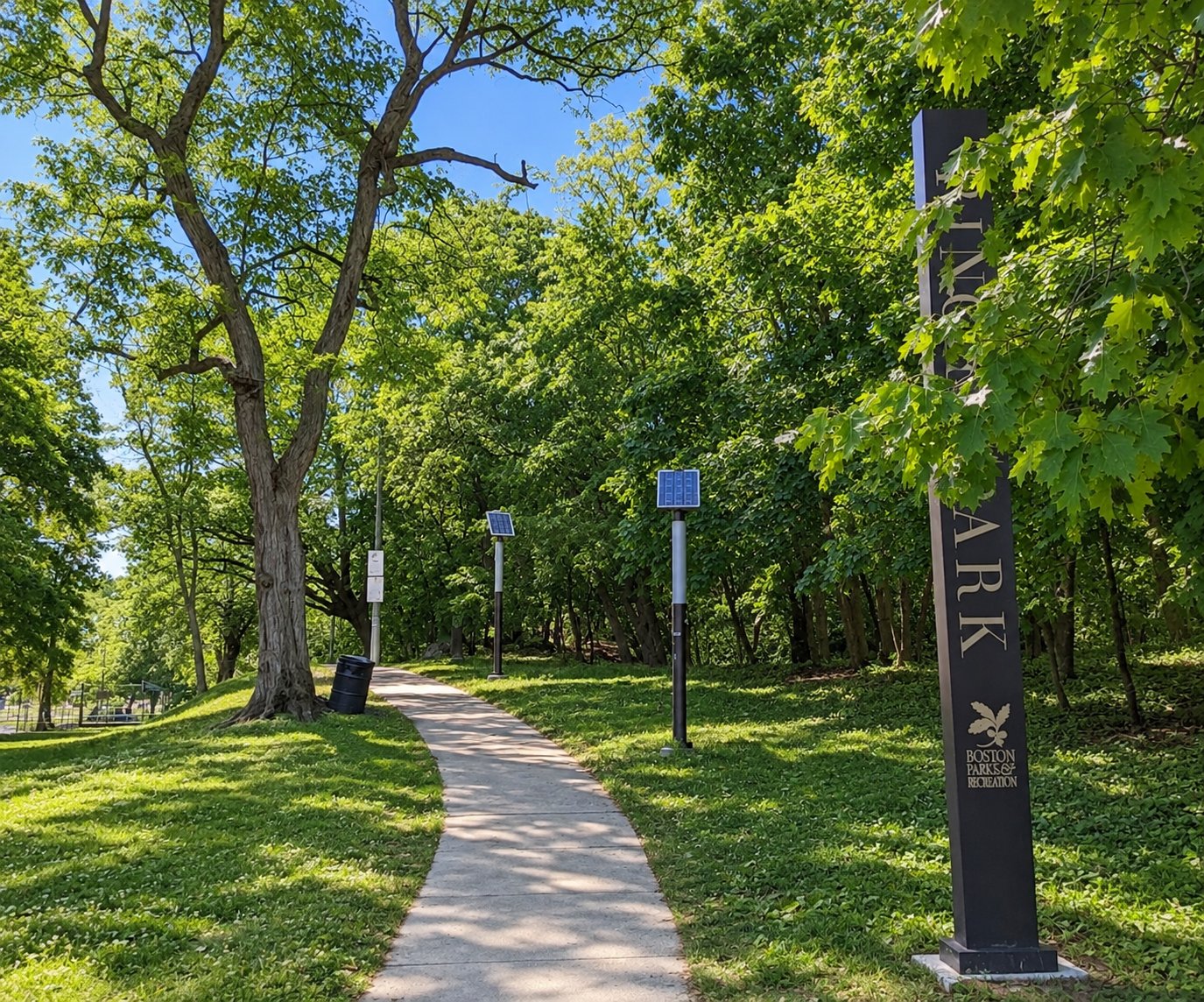
None of this changes what the neighborhood does on a Tuesday night or a Saturday morning, and there is real, useful information for anyone living here right now. Ringer Park, closed since October 2025 for construction, was expected to fully reopen at the end of August, so the fields should be back in rotation as of this writing. McKinney Playground is on the opposite schedule: its athletic fields closed on August 17, earlier than the originally planned September start, though the playground and sports courts stay open through September 14 before the site shuts down until fall 2027.
And on Sunday, September 27, at 1 p.m., the Allston Brighton Parade Committee holds its 43rd annual parade, a tradition that predates every business mentioned above and will presumably outlast whichever landlord owns the storefronts along its route.
If you are watching this corridor for reasons that go beyond dinner plans, whether you own on Harvard Avenue, rent nearby, or hold a small commercial lease of your own, the ownership and rent dynamics behind a sale like the Gordon building are exactly the kind of detail Prism Real Estate Group tracks block by block across Greater Boston. If you want a clear-eyed read on what a specific property or block is actually worth right now, request a free market valuation and we'll walk you through it.